Can You Replace a Soffit Without Removing the Fascia in New Lexington?
Most of the time the fascia can stay put, and knowing why helps you understand what a fair soffit job should include.
Can you replace a soffit without removing the fascia?
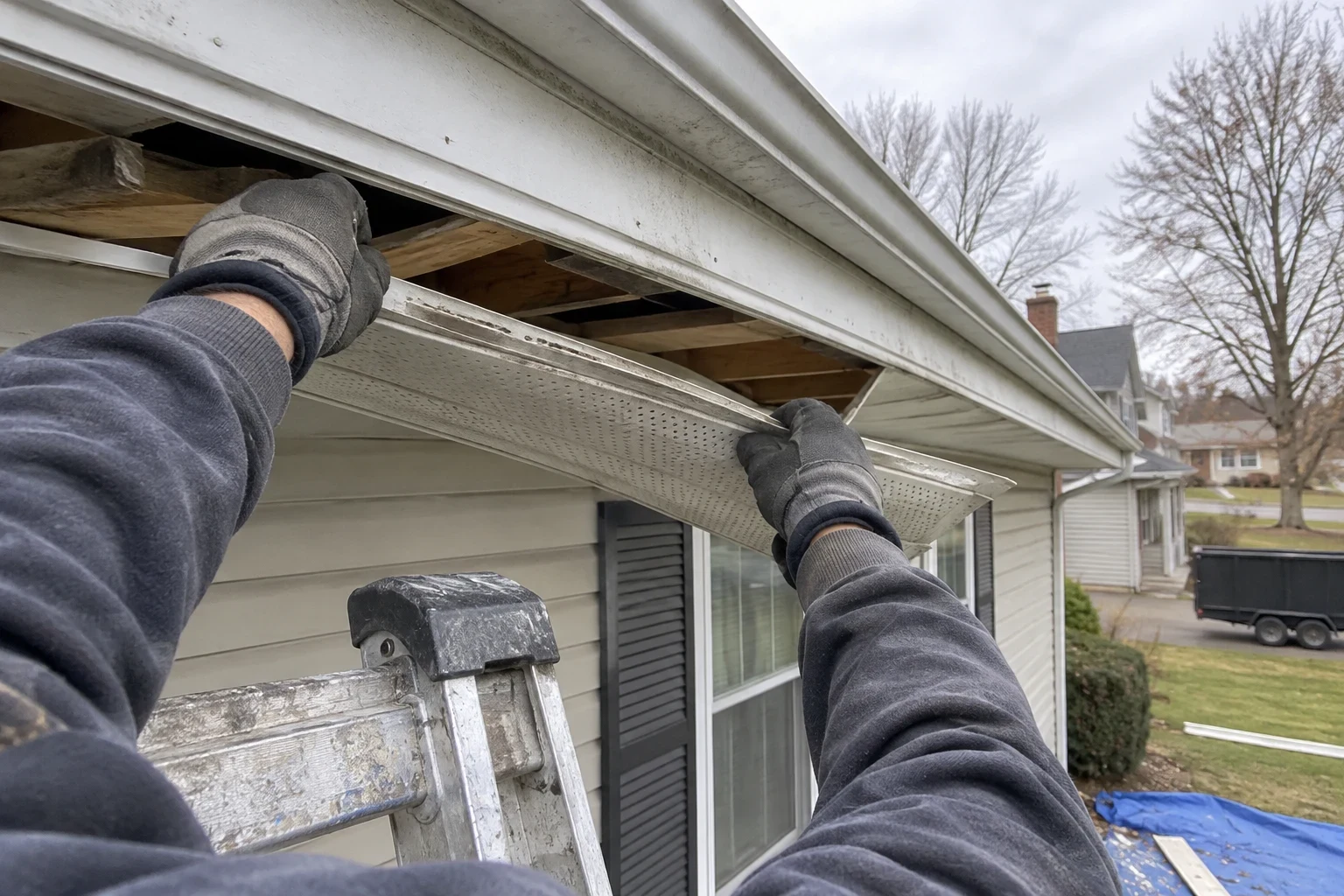
Yes, in most cases you can replace a soffit without removing the fascia. Soffit panels slide into a channel along the wall and tuck behind the fascia's lower edge, so a solid fascia can usually stay where it is. The exception is a fascia board that is soft or rotted. Then both should be replaced together.
How soffit and fascia fit together
The fascia is the board that runs along the edge of your roof, facing out. Your gutters hang on it, and the bottom edge of your shingles sits just above it. The soffit is the flat panel on the underside of the overhang, closing the gap between that fascia board and the wall of your home.
Because the two meet at a corner, people often assume one can't come off without the other. In practice, soffit is usually held at two points: a channel or nailing strip against the wall, and a lip or groove at the back of the fascia. That connection decides how much has to come apart.
- Vinyl and aluminum soffit panels slide into a J-channel or F-channel at the wall and rest in a groove behind the fascia trim.
- Wood soffit is typically nailed to small framing pieces, called lookouts, that run from the wall out to the rafter tails.
- Aluminum fascia wrap is a thin metal cover bent over the wood fascia board, and its bottom edge often hooks over the soffit.
When the fascia can stay in place
If the fascia board is solid, we leave it alone. With vinyl or aluminum soffit, we can usually lift or loosen the bottom edge of the fascia wrap, slide the old panels out and slide new ones in. The wrap goes back down and gets fastened again, and the fascia itself never comes off the house.
Wood soffit takes a little more care but works the same way. We cut out the damaged sections, check the lookouts behind them, and fasten new material to sound framing. Your gutters can usually stay hung the whole time, which keeps the job shorter and quieter.
A good sign the fascia can stay: you press on it with your thumb and it feels firm, the paint or wrap is intact, and the gutters sit level without pulling away.
When the fascia has to come off too
Soffit and fascia usually fail for the same reason: water. When a gutter overflows or backs up, water runs behind it and soaks the top of the fascia board first. Over a few seasons the wood softens, then the moisture wicks down into the soffit edge. If we only swapped the soffit in that situation, the new panels would be fastened to rotten wood and you would be calling us back in a year or two.
Central Ohio winters make this more common. Ice dams form along the roof edge on cold nights after a snowfall, and meltwater gets pushed under the shingles and behind the gutter. Older homes with painted wood fascia and no metal wrap tend to show it first, often as peeling paint along the lower edge of the board.
In these cases we tell you plainly that the fascia needs replacing, show you what we found, and explain why. Doing both at once costs less than coming back later, because the gutters only need to come down and go back up one time.
- The fascia board feels spongy or crumbles when probed with a screwdriver.
- Gutter spikes or hangers have pulled loose because the wood can't hold them.
- You see dark staining, mold or daylight gaps where the fascia meets the roof deck.
- Animals have chewed or nested through the corner where soffit and fascia meet.
- The drip edge is missing, so water has been running straight down the face of the board.
What a soffit job looks like at your home
We start by walking the roof edge with you and checking the soffit, fascia, gutters and the first row of shingles from a ladder. You'll hear our honest read on whether the fascia can stay before any work is scheduled, and the estimate lists each piece separately so you can see what is being replaced and why.
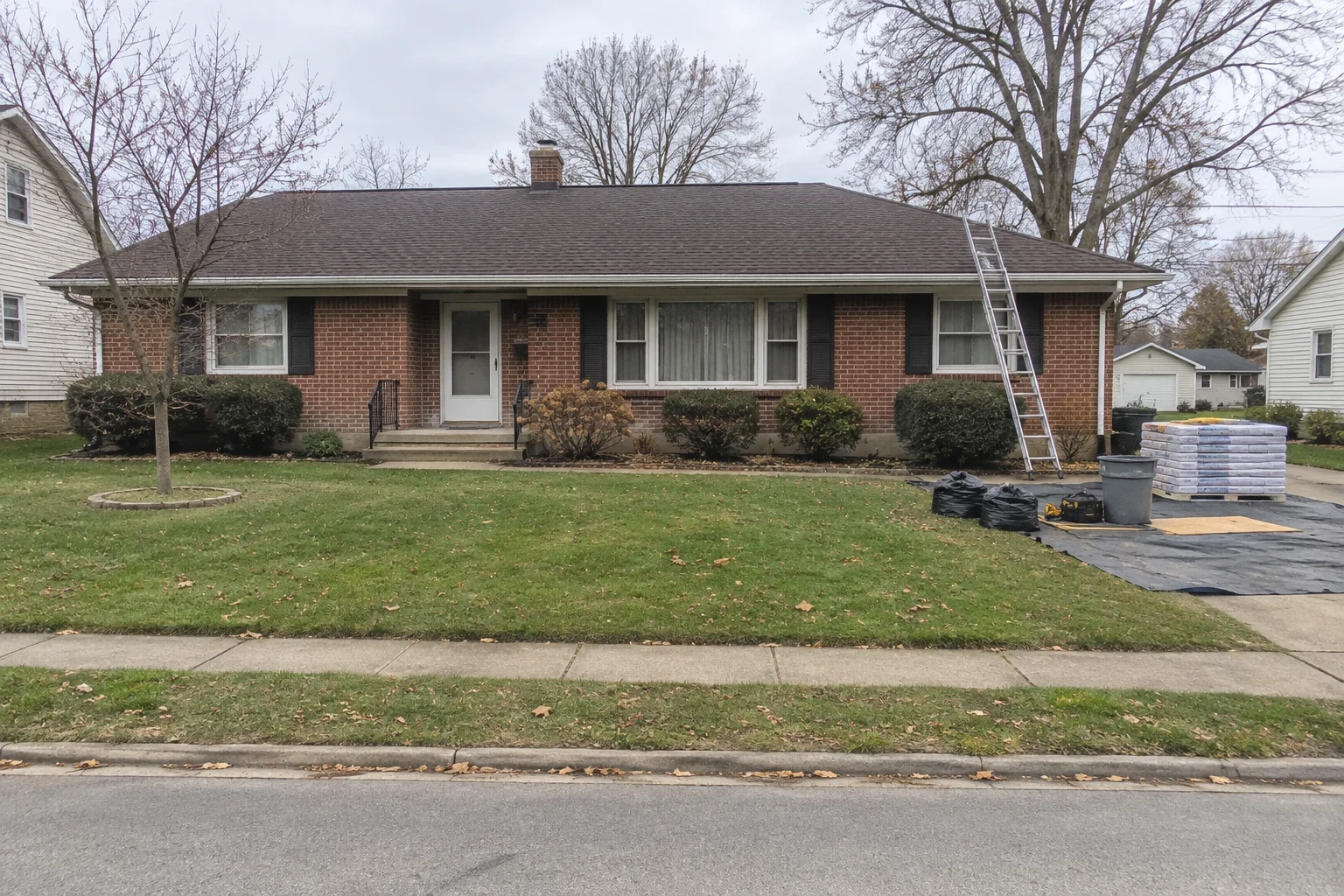
On the work day we lay tarps under the eaves to protect your landscaping and catch old nails and debris. Panels come down one section at a time, so your attic is never left wide open overnight. If we find a soft spot we didn't expect once the old soffit is off, we stop, show you, and talk it through before going further.
Before we leave, we run a magnet sweep through the yard and driveway, haul away the old material, and check that every gutter is draining toward its downspout. It's the same care we'd want if the house belonged to someone on our own street.
Why the ventilation matters while it's open
Soffit isn't only trim. On most homes it's where fresh air enters the attic, flowing up under the roof deck and out through vents near the ridge. If old wood soffit was solid with no vents, or vented panels got painted over or blocked by insulation, your attic can trap heat in summer and moisture in winter.
Replacing soffit is the easiest time to fix that. We can install vented panels where they belong and make sure the insulation baffles above them keep the airway clear. A well-vented attic helps shingles last longer and cuts down on the condensation that leads to frost and mildew on the underside of the roof deck.
More questions about soffit and fascia
- Can I replace just one damaged section of soffit?
- Often, yes. If the damage is limited to one run, we can replace those panels and match the color as closely as the product line allows. Older vinyl fades, so a new section may look slightly brighter at first.
- Will my gutters have to come down?
- Not if the fascia is sound. Gutters only need to come off when the fascia board behind them is being replaced, and we rehang and check them for proper slope afterward.
- Is vinyl or aluminum soffit better for an Ohio home?
- Both hold up well through freeze-thaw cycles. Aluminum is a bit stiffer and less likely to sag over wide overhangs, while vinyl resists dents and is often the simpler choice for typical eaves. We'll walk you through which fits your home.
- How long does a soffit replacement take?
- Most homes take a day or two, depending on how many feet of eave there are, how high the roofline is, and whether any fascia or framing needs replacing once the old panels come off.
Not sure if your fascia can stay?
Give us a call and tell us what you're seeing along your roof edge. We'll set up a time to look at your soffit and fascia in person, explain what can stay and what needs replacing, and walk you through the estimate line by line.