ServicesRoof Inspections
New Lexington Roof Inspections
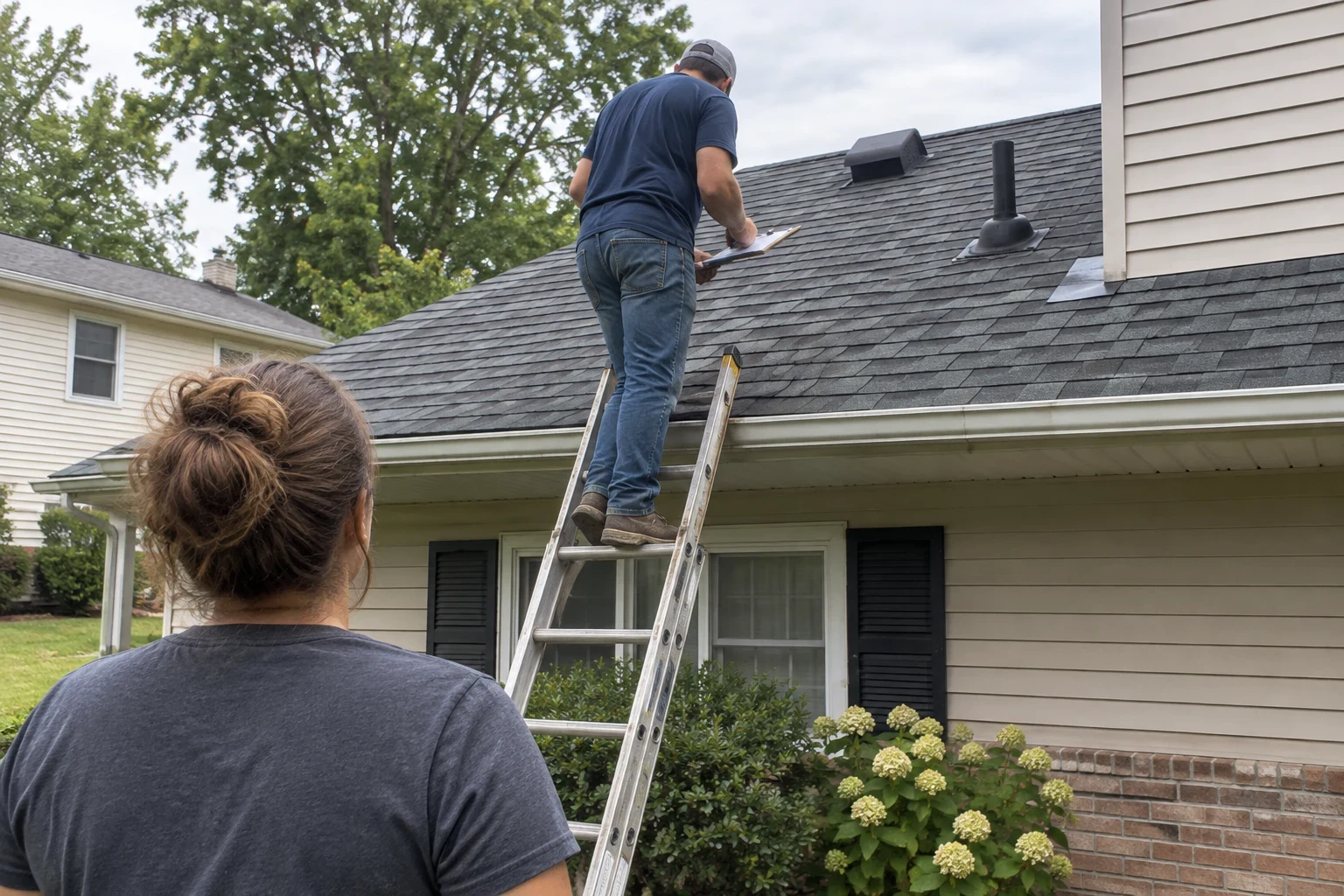
Knowing the real condition of your roof comes before spending money on it. We get up top and check each slope, edge and opening, then look in the attic. Afterward we sit with you over the photos and explain what needs work now, what can hold off and what is in good shape.
A clear look before you spend a dollar on repairs
An inspection comes before any big decision about your roof. Trouble tends to begin quietly, with one lifted shingle, a split pipe boot or flashing that has crept away from the chimney. You cannot spot those from the driveway. Once a water mark shows up indoors, the leak has often been at work for weeks or months.
We treat your roof the way we would treat a neighbor's. We check all of it, explain what we see in everyday words and never make up problems. If your roof has good years ahead, you will hear that. If it needs roof repair, we show you the exact spot and the reason. If roof replacement is the better path, we lay out why and let you decide at your own pace.
Our freeze-thaw winters are tough on shingles and seals, so a check once the cold lets up tends to catch small issues before they grow.
What we look at on your roof
- 01
Shingles and the roof surface
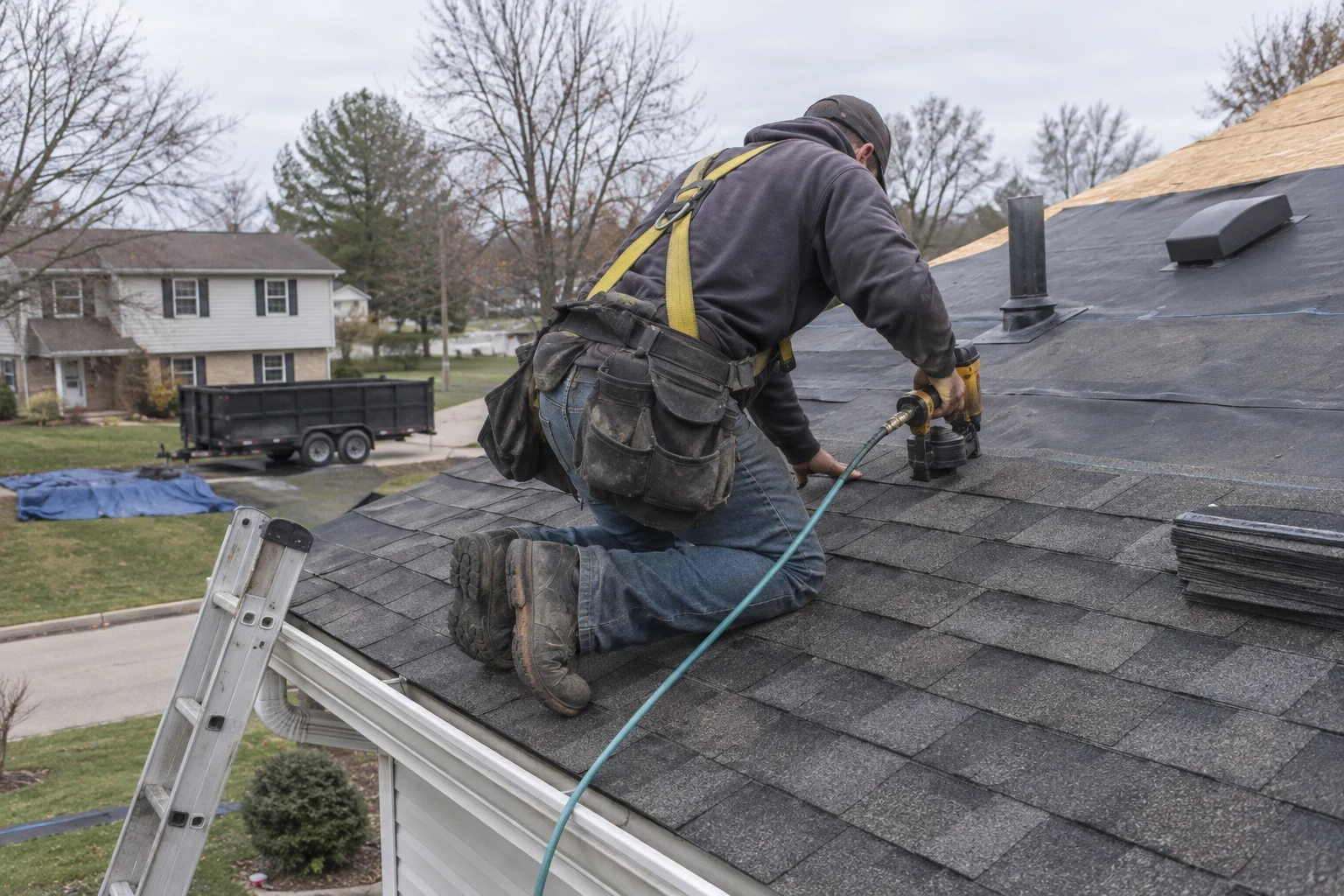
We look for shingles that are cracked, curling, loose or missing, worn patches where the granules are gone and nails that have backed out. Any area that gives a little underfoot gets written down, since it can point to damaged decking underneath.
- 02
Flashing, valleys and openings
Chimneys, skylights, vent pipes and valleys are where most leaks begin. We check that each piece of flashing is tight and intact, that the sealant has not dried out or cracked, and that the rubber collar on every pipe still grips snugly.
- 03
Edges, gutters, soffit and fascia
We check whether your gutters drain the way they should, sag or overflow, and whether the fascia boards behind them have begun to rot. Stained or soft soffit gets noted too, because it usually means water is getting to the roof edge.
- 04
Attic and ventilation
When there is access, we look in the attic for specks of daylight, water stains, damp insulation and frost or mold on the underside of the decking. Poor airflow ages shingles early and helps ice dams form, so we check the intake and exhaust vents as well.
- 05
Photos and written notes
Every issue we mention comes with a photo, so you can see it with your own eyes. You also get written notes ranking each finding by what should be handled first.
Questions about Roof Inspections?
Call(740) 661-3711Signs it is time for a roof inspection
Your roof is getting older
If your shingles are past the middle of their expected life, a check every year or two helps you plan instead of being caught off guard.
Granules in the gutters
Dark, sandy grit collecting in gutters or at the bottom of downspouts means shingles are wearing down.
Stains on ceilings or in the attic
Brown rings, peeling paint near the ceiling line or damp spots in the attic all deserve a look from above before they spread.
Ice dams and heavy icicles
Thick ice along the eaves in winter usually points to heat escaping into the attic. Water can back up under shingles behind the ice.
You are buying or selling a home
An inspection gives you a clear picture of the roof's condition before you negotiate or list, with photos you can share.
Something just looks off
Sagging lines, shingles that look wavy or loose flashing you noticed from the yard are worth checking. Sometimes it is nothing, and that is good to know too.
How your inspection goes
- 1
Start with a phone call
Let us know what has you concerned and roughly when the roof went on, if you have an idea. We find a day and time that suits you and quote the inspection price before we ever show up.
- 2
Checking the roof itself
Where it is safe, we walk the roof and go over each slope, opening and edge. If the roof is too steep or the shingles are brittle, we work from ladders and the eaves so we do not cause damage.
- 3
A look in the attic
With your permission, we head into the attic to check for leaks, moisture and airflow problems. A drop cloth goes down under the hatch, and everything is left as it was.
- 4
Going over the findings
Before leaving, we sit with you and page through the photos. We explain what we saw, what we would tackle first and what can safely sit for now. Nothing has to be decided that day.
What sets the price of an inspection
We give you the inspection price over the phone, before anything gets scheduled. Compared with chasing a hidden leak later, it is a small cost. The number depends mostly on how much time your roof needs and what kind of findings you want in hand afterward.
- Size and steepness
- More square footage means more ground to cover. A steep pitch slows us down because we move carefully and set up extra footing.
- Chimneys, skylights and dormers
- Each one has its own flashing and seals to look over. A plain gable roof with two vent pipes goes faster than one with several dormers and a chimney.
- Getting into the attic
- A pull-down ladder in a hallway takes minutes. A small closet hatch, a cramped space or no opening at all means more time or a different way of checking the underside.
- How you plan to use the findings
- Most homeowners just want the photo walkthrough. If you are buying or selling and need a fuller written summary to share with an agent or buyer, putting that together adds time.
Roof inspection questions
How much time does an inspection take?
For most homes, plan on roughly an hour. A larger roof, steep pitch or several chimneys and skylights can stretch it. The hour includes the attic and the time we spend going over photos with you, which we never rush.
Is the inspection just a way to sell me a roof?
Not with us. The goal is an honest picture of your roof. Many roofs we look at need a minor fix or nothing at all, and we tell you that. If a new roof really is the answer, the photos show why, and you decide.
Should I be home for it?
The outside work doesn't need you there. We'd like you home for the attic check and the wrap-up, though. Looking at the photos together and asking questions right then is the most useful part of the visit.
Do you inspect roofs during winter?
Yes, when the roof is clear and safe to walk. If snow or ice covers it, we start in the attic and check the eaves from ladders, then come back for a closer look after it melts.
What if you find something wrong?
We point it out in the photo, explain the cause and tell you what the fix involves. If you want us to do it, we are insured and bonded, and the repair carries a 10-year workmanship warranty. There's no rush to decide.
How often does a roof need inspecting?
Once every year or two is a smart routine, especially as the roof ages. Spring is a good time after a rough winter, and before buying or selling a home is another.
See what your roof actually needs
Give us a ring, share what caught your eye, and we will pick a day to come take a look. You get clear photos, honest answers and all the time you need to decide.