ServicesGutters
Gutters in New Lexington
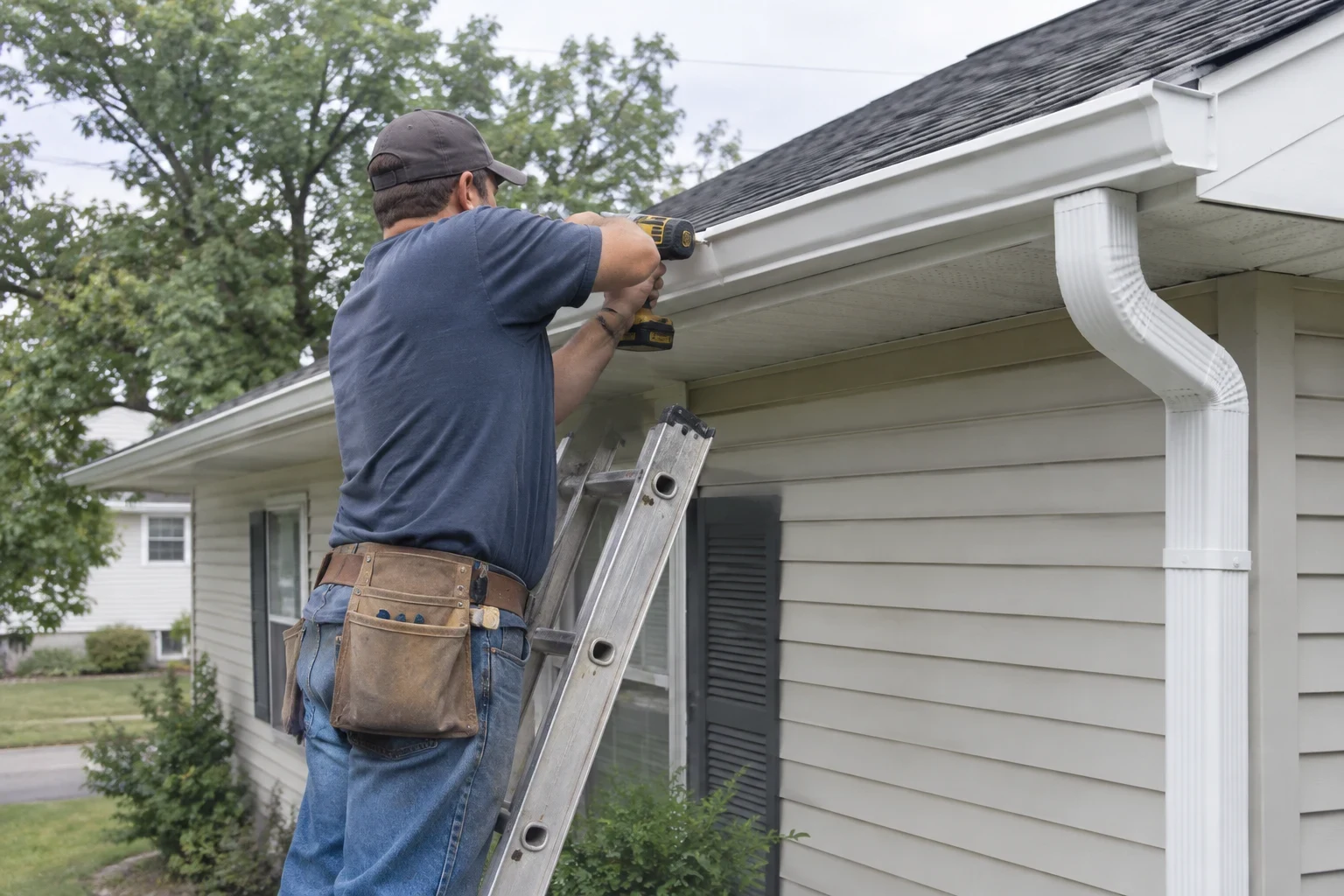
We hang one-piece gutters and downspouts matched to the size of your roof and set at a slope that keeps water moving. If rain pours over the edge or puddles near your foundation, we track down the cause, repair what is behind it and leave your yard tidy.
Gutters that move water where it belongs
Gutters catch the rain that runs off your roof and send it away from your home, before it can rot the fascia, stain the walls or seep into the basement. When they stop working, the cause is usually one of a few things. The trough is too small for the roof, the slope has sagged so water pools in the middle, the hangers have pulled out of soft wood, or the downspouts drain right at the foundation.
We check for each of these before suggesting any work. Sometimes a section only needs re-hanging and new sealant. On older homes with sectional gutters leaking at every seam, a new one-piece run is often the better investment, and we will tell you honestly which one fits your home.
We treat your house the way we'd want a neighbor to treat ours. We're careful around your garden beds, honest about what the job needs, and we don't leave until every old screw and scrap is picked up.
What a gutter job with us includes
One-piece aluminum runs
We form each gutter on site from a coil, so it runs as one length from corner to corner. With no joints along the way, leaks have far fewer places to start.
Sizing for your roof
A large or steep roof can overrun a standard 5-inch gutter in a heavy storm. We measure the roof area feeding each run and move up to 6-inch gutters and 3x4 downspouts where the water volume needs it.
Steady pitch and hidden hangers
Every run slopes evenly toward its downspout so nothing sits in the trough. Hidden hangers go in close together and screw into solid wood, which helps the gutter carry wet leaves and winter ice.
Fascia check first
A gutter is only as strong as the board behind it. If we find soft or rotted fascia, we show you and replace it before hanging anything, and our Soffit and Fascia page explains that work.
Downspouts that drain away
We place downspouts where they suit your yard and add extensions or splash blocks so water lands well away from the foundation.
Guards when they help
Under heavy tree cover, gutter guards can earn their keep. With an open roofline, we will tell you they are likely not worth the money.
Clues that your gutters are giving out
- Water spilling over the front edge
- When a steady rain sends water over the outer lip, a blockage, an undersized trough or a slope pitched backward is usually to blame.
- Dips and gaps at the roofline
- A trough that droops between its hangers tends to have fasteners working loose or rotting boards behind them.
- Leaks where pieces meet
- Sectional gutters on older homes drip at their joints. A bead of sealant helps for a while, but freezing and thawing keeps prying those joints apart.
- Marks and flaking paint under the eaves
- Streaked siding, trim paint that flakes off or green film below the roof edge means water is getting behind the gutter.
- Wet basement or mulch that washes away
- Standing water along the foundation, or mulch that ends up across the yard after each storm, most often comes from a downspout emptying right beside the house.
How the day goes
- 1
A walk around your home
We look at every run from the ground and the ladder, check the fascia and note where water is ending up. You get a clear explanation and a written estimate, line by line.
- 2
Setting up and protecting the yard
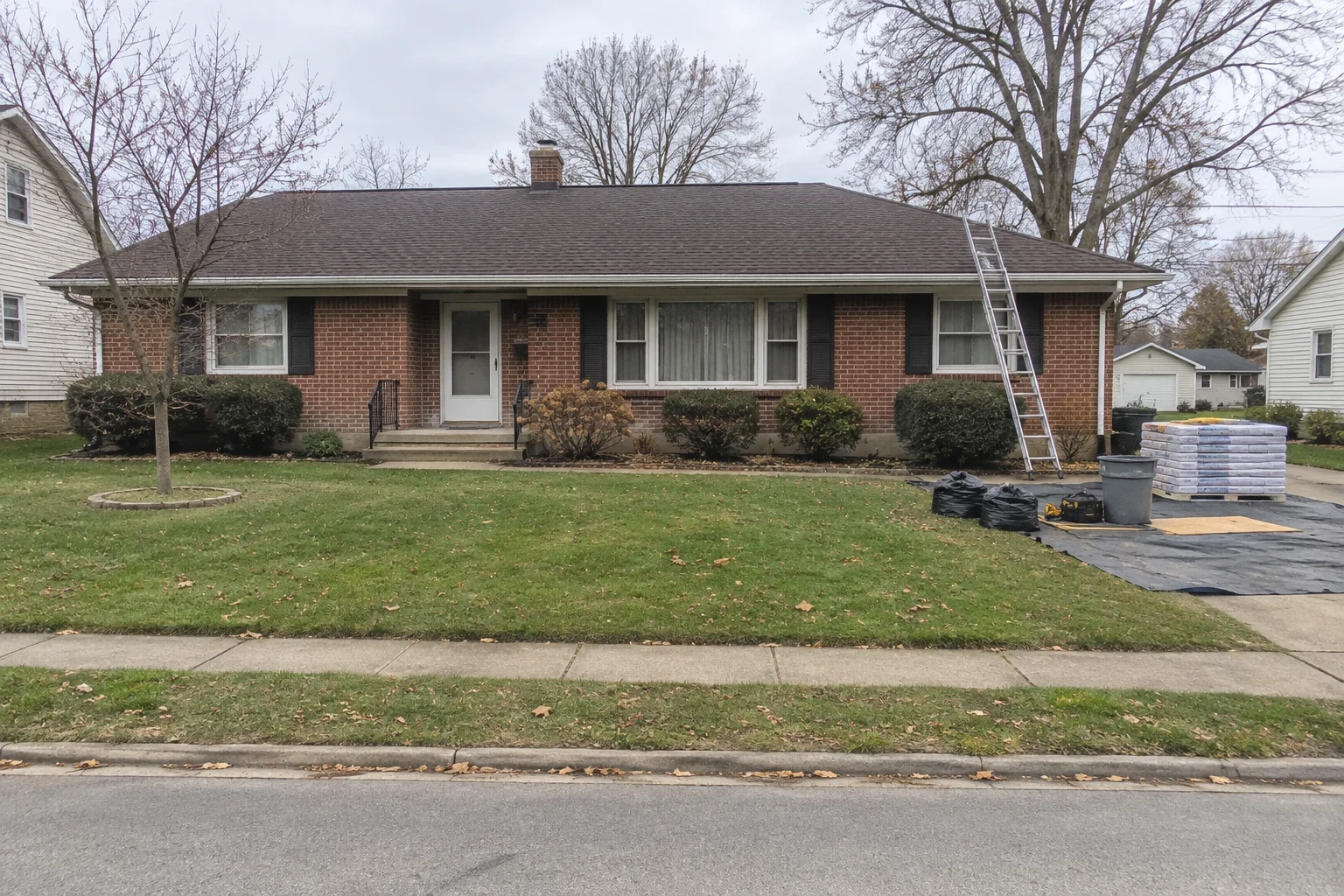
On install day we lay down tarps over beds and keep ladders off the plants. Your driveway stays usable for most of the job.
- 3
Out with the old, repairs underneath
We take down the old gutters, then replace any rotted fascia or drip edge we found so the new system has something solid to hold.
- 4
Forming and hanging the new runs
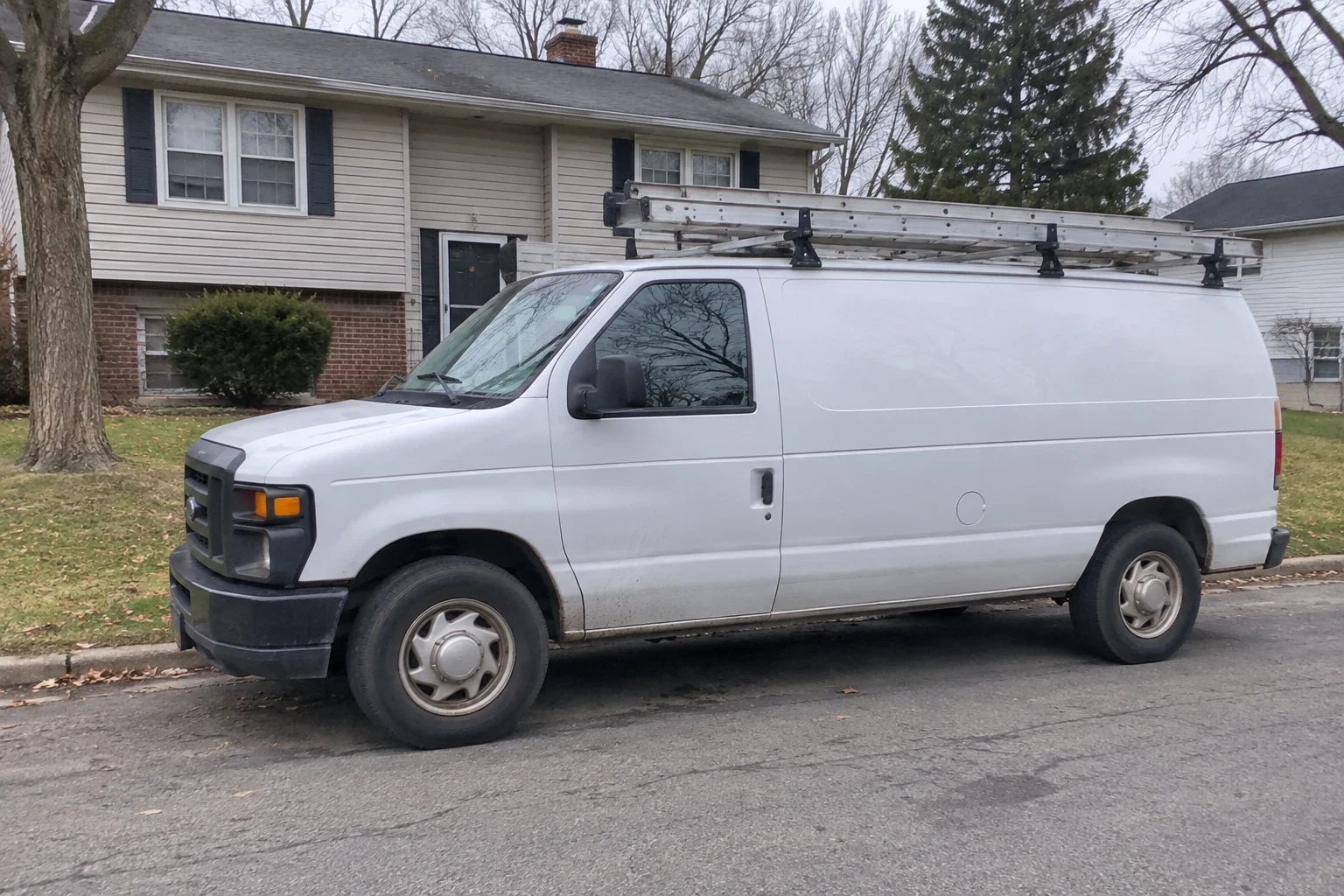
The seamless gutter is formed in our truck to the exact length, hung at the right pitch and sealed at the end caps and corners. We run water through it before we call it done.
- 5
Cleanup and a final look
We haul off the old metal, sweep up screws and trim pieces, and walk the job with you so you can see where every downspout drains.
What sets the cost of new gutters
Most of the price comes down to two things: how many feet of gutter go up and how easy those eaves are to get to. Damage hiding behind the old gutters can add to the job, so if we run into any, we photograph it and show you before doing more. Every item gets its own line on your written estimate, so the final bill matches what you approved.
- Length of the runs and number of corners
- Longer runs and extra mitered corners take more aluminum and more hours on the ladder.
- Gutter and downspout sizing
- Stepping up to six-inch troughs and 3x4 downspouts adds a little to the price. For a big or steep roof, that added capacity is usually worth it.
- How high and how easy to reach
- Upper-floor eaves, a sloping yard under the ladder or a run over a porch roof all need more time to set up safely.
- The board the gutter hangs on
- Any rotted fascia gets replaced before the new gutter is hung. When the wood is solid, that charge never shows up on your estimate.
- Add-ons you can choose
- Gutter guards, downspout extensions and extra outlets each have their own price, so you pick only the ones your home needs.
Gutter questions we hear
- Do I need new gutters, or can you repair the ones I have?
- Many times a repair does the job. Gutters in decent condition may just need re-hanging, fresh sealant or a downspout moved. If old sectional gutters drip at most seams, or the metal is dented and rusting through, a new run is usually the better value, and we will explain why.
- Why choose one-piece gutters?
- Each run is made as a single length, so the only seams are at corners and outlets. Fewer seams means fewer drips, and fewer edges for leaves and ice to snag on.
- How do your gutters hold up in winter?
- Ohio winters send snow and ice sliding into the gutters. We set hangers close together, fasten them into solid fascia and keep the pitch even so meltwater drains instead of freezing in place. Ice dams usually start with attic ventilation or insulation, and we will let you know if we see signs of that.
- Is the work covered?
- Yes. We are insured and bonded, and each gutter installation comes with a 10-year workmanship warranty. If something goes wrong because of how we installed it, we come back and fix it.
- I also need a new roof. Which should come first?
- Do them together, or do the gutters right after the roof. The new drip edge and any fascia repair tie the two jobs together, and you won't pay to take gutters down and put them back up twice. Our Roof Replacement page explains how that work goes.
Ready to stop the overflow?
Give us a ring and describe what your gutters do in a hard rain. We will find a time to come out, look over every run and explain your options in plain terms. We cover New Lexington and nearby towns such as Lancaster, Zanesville and Logan.